


SYNEXIS FACT SHEET
What is Synexis?
Founded in 2008 by former Army Major Jim Lee, Synexis LLC is a pioneer in the microbial reduction of occupied spaces. A West Point graduate and instructor, Jim served in the United States Army and earned his Masters of Chemical Engineering from the University of Virginia. After retiring from the Army, Jim turned his attention to the private sector and set out to develop a full-time BioDefense system that would immediately mitigate a bio-risk from the moment of its introduction. Using their patented technology, Synexis is the sole developer of the process by which naturally occurring oxygen and humidity are taken from the air to create Hydrogen Peroxide Gas (H2O2) or Dry Hydrogen Peroxide (DHP™). Wherever air goes in an indoor facility, so too will DHP™ to help reduce the presence of viruses, bacteria, mold, odors, and insects. The Synexis system is UL Certified to produce no ozone and works continuously without disruptions or changes in workflow. Synexis currently holds 16 US patents with 17 pending.[1] [2]
What is DHP™?
Synexis-made DHP™ is created from the ambient oxygen and humidity of an enclosed environment moving across a proprietary membrane within the device. The resulting DHP™ is then blown into the occupied space by a fan used to move air across the membrane. Since it’s a true gas, it flows unaided to every corner of the occupied space, reducing viruses, bacteria, mold, odors, and insects in the air, on surfaces, and the most hard-to-reach places. When Synexis technology is installed, it operates safely*, effectively, and continuously, requiring maintenance only once per quarter.
Is it safe*?
DHP™ is a form of gas whose molecule, Hydrogen Peroxide, is a natural component of human lungs. Plus, DHP™ occurs at levels well below OSHA’s standard. Synexis Devices also underwent rigorous testing by Underwriter Laboratories (UL) and were certified to meet UL2998 for zero ozone emissions. Additionally, Synexis is CARB certified and meets California ozone emissions limit. So, yes, it’s safe. [3] [4]
Where does Synexis technology work?
Synexis technology is utilized in a variety of indoor spaces, including retail stores, restaurants, fast food chains, university housing, professional sports facilities, corporate office buildings, hospitals, nursing homes, and film & television production lots.
Synexis Products
Synexis personalizes every space and uses the same patented DHP™.
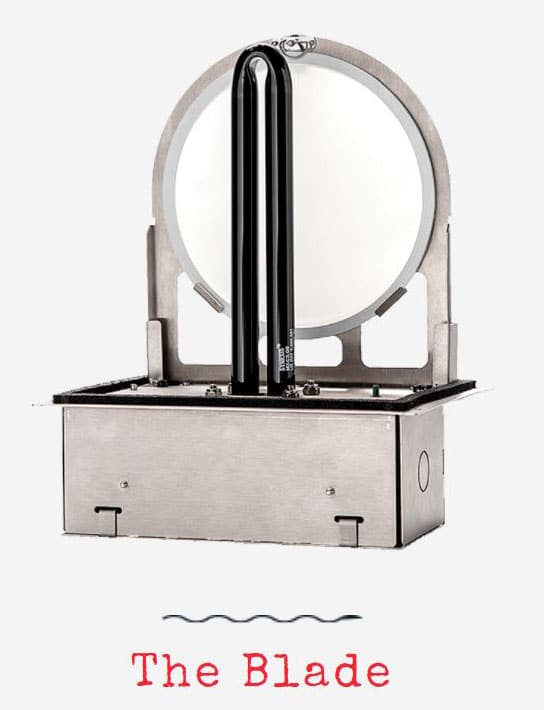
The Blade - Designed to fit in-line with existing HVAC ductwork. The Blade can be deployed in various sized
ducts via adapters.

The Sphere - A sleek, portable option for clients who desire effective microbial reduction while incorporating the technology into the aesthetics of their facility.
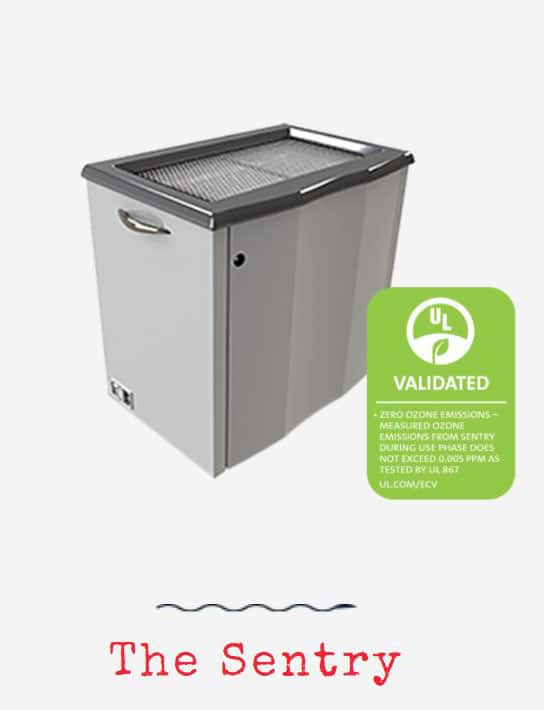
The Sentry - A portable device designed for industrial facilities with an inaccessible or nonexistent HVAC system.
The Synexis® word mark is a registered trademark owned by Synexis LLC. Synexis® technology is classified as a pesticidal device and mitigates microbial load in the air and on surfaces. Synexis® does not claim to mitigate microbes on, or in humans, and does not claim to have an impact on patient outcomes. Synexis® is not intended to replace intermittent cleaning with EPA-approved disinfectants or as a substitute for the use of PPE as recommended in guidance set by local and state governments as part of their SARs-CoV-2 response.
1 METHODS FOR THE CONTROL OF ARTHROPODS USING NEAR-IDEAL GAS PHASE HYDROGEN PEROXIDE. US 9,808,013 B2. https://www.uspto.gov/web/offices/com/sol/og/2017/week45/OG/html/1444-1/US09808013-20171107.html • Accessed June 9, 2020.
2 US Patents: https://synexis.com/science/patents/
3 Regulated by the EPA under Chapter 13 of the Federal Insecticide, Fungicide, and Rodenticide Act (FIFRA)
4 Centers for Disease Control and Prevention. (2019, October 30). CDC - NIOSH Pocket Guide to Chemical Hazards - hydrogen peroxide. Centers for Disease Control and Prevention. Retrieved November 11, 2021, from https://www.cdc.gov/niosh/npg/npgd0335.html